
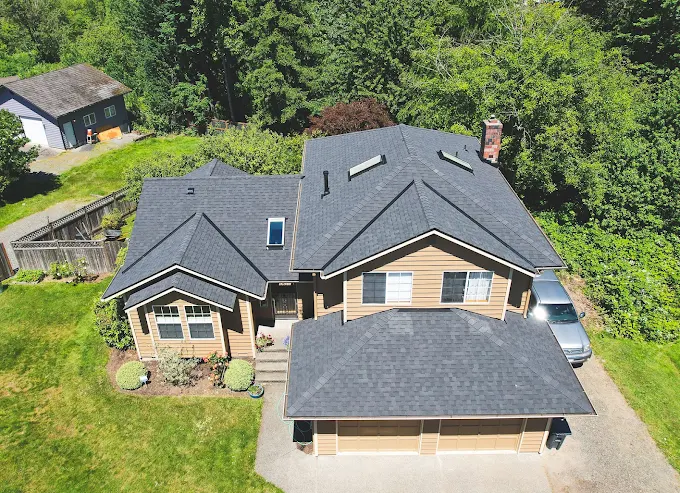
Lowland Puget Sound snow tends to be wet, heavy, and gone within days. Because it's infrequent, homes here often have the insulation and ventilation shortcomings that cold-climate homes long ago designed out — and those shortcomings show up as an ice dam during the one cold week of the year.
How an ice dam forms
Heat escaping from the living space warms the underside of the roof deck. Snow on the warm part of the slope melts, runs down to the cold eave that overhangs unheated air, and refreezes there. The ridge of ice that builds up blocks the next round of meltwater, which backs up under the shingles — where nothing is designed to stop water sitting still.
It's an insulation and ventilation problem, not a roofing one
The fix is keeping the roof deck the same temperature as the outside air. That means adequate insulation on the attic floor, sealing the air leaks around can lights, bath fans and the attic hatch, and a balanced intake-to-exhaust ventilation path — clear soffit vents at the eaves and continuous ridge venting at the top. A roof that stays cold doesn't build dams.
Bath and dryer fans venting into the attic
We still find these regularly. A fan dumping warm, wet air into an attic both feeds ice dams and soaks the decking from below all winter. Every one of them should terminate outside the building.
What not to do during the freeze
Don't chip at ice with a hammer or shovel — you'll take shingles with it. Don't put salt directly on the roof; it corrodes flashing, fasteners and gutters and kills the plants below. A roof rake used from the ground to pull snow off the lower few feet of slope is the safe short-term measure.
Heavy wet snow and load
Our snow carries far more water weight than dry powder, especially when rain falls on top of it. If you see new sagging, hear creaking, or find doors inside suddenly sticking, treat it seriously and get the structure looked at.
Cold snaps in Bellingham, Lynden and Sedro-Woolley
Whatcom and Skagit counties see colder winter air than the rest of the I-5 corridor, especially in Lynden, the north county and the upper Skagit Valley around Sedro-Woolley. When snow sits on a poorly ventilated roof there, heat escaping from the attic melts it and it refreezes at the eaves. Good soffit and ridge ventilation plus enough attic insulation are the long-term fix.
Serving Bellingham, Lynden, Sedro-Woolley and nearby communities. Call (425) 783-9543.